Best High Powered Binoculars for Hunting (2026): 8 Long-Range Picks
As an Amazon Associate we earn from qualifying purchases. How we choose
Best High Powered Binoculars for Hunting (2026): 8 Long-Range Picks
When the animal is a half-mile across the canyon, ordinary glass quits. Here are the 12x, 15x and 18x binoculars that reach out and let you judge a trophy before you ever take a step — plus how to keep them steady.
⚠️ Disclosure: This guide contains affiliate links. As an Amazon Associate we earn from qualifying purchases (#ad) at no extra cost to you. We only recommend optics we would carry into the field ourselves.
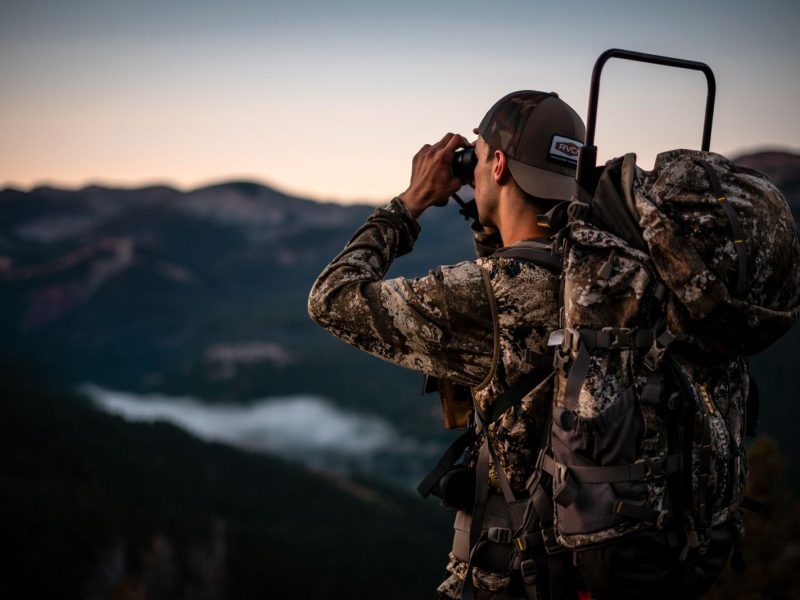
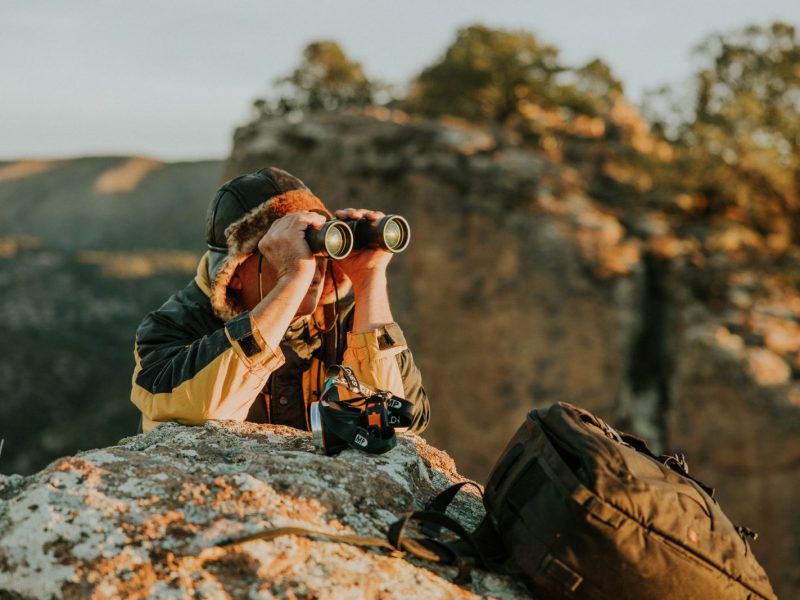
Out West, hunting is often won with your eyes, not your boots. You sit on a ridge, pick apart the far slope, and find the buck bedded in the shadows before he ever knows you exist. The problem? At 800, 1,000, or 1,500 yards, an 8x or 10x binocular turns animals into tiny gray specks. You need reach — and that is exactly what high powered binoculars give you.
This guide covers the best high powered binoculars for hunting in 2026, from a $110 budget hero to an $1,300 long-range cannon. But raw magnification is only half the story. More power also means a narrower view, more hand shake, and a dimmer image at dusk. So we will not just list glass — we will show you how much power you actually need, when a tripod is non-negotiable, and how to pick the right reach for your terrain. Every pick has a direct link so you can check today’s price.
- Best overall 12x: Vortex Viper HD 12×50 — sharp, tough, lifetime warranty.
- Best max reach: Vortex Kaibab HD 18×56 — trophy-judging at extreme distance.
- Best budget: Celestron Nature DX 12×56 — bright 12x for under ~$170.
📋 What’s in this guide
Why Go High Power — And the Trade-Offs You Must Know
High powered binoculars (12x and up) exist for one reason: to put more detail on a distant animal. When you are glassing open country, that extra magnification is the difference between “there’s something brown out there” and “that’s a mature 4×4 buck, and he’s bedded facing away.” But every bit of power you add costs you something. Understanding this trade is the whole game.
What you gain
- Reach & detail. A 15x binocular makes an animal at 1,000 yards look like a 10x animal at ~670 yards. You can count points and judge body size from way out.
- Less ground covered on foot. See more from one glassing knob, hike less, spook fewer animals.
- Better trophy judging. More magnification = more confidence before you commit to a stalk.
What you give up
- Field of view. Higher power = a narrower window. A 18x can feel like looking through a straw, which makes finding animals harder.
- Steadiness. Magnification multiplies your heartbeat and hand tremor too. At 15x+, a handheld image bounces so much that fine detail smears.
- Low-light brightness. More power on the same lens shrinks the exit pupil, so the image dims earlier at dawn and dusk. (For pure twilight performance, see our best low light binoculars guide.)
- Weight. Big 56mm high-power binos can top 2.5–3 lbs.
💡 Key insight: High power is a specialist tool for open country and tripod glassing — not a do-everything upgrade. The right answer is matching power to terrain, not just buying the biggest number.
How Much Magnification Do You Actually Need?
Here is the simple framework we use to match power to the hunt:
- 8x–10x — Timber, whitetail, all-day carry, close-to-medium range. Wide, bright, steady. (Not covered here.)
- 12x — The sweet spot for “high power you can still hand-hold.” Great for Western hunters who hike and glass. Braceable; tripod optional.
- 15x — Serious long-range glassing from a fixed position. Tripod strongly recommended. Pairs with a 10x for hiking.
- 16x–18x — Extreme-range trophy judging (sheep, mule deer, antelope). Tripod required. A dedicated glassing instrument, not a hiking bino.
Quick Comparison: All 8 High-Power Binoculars
| Binocular | Config | Exit pupil | Weight | Tripod? | Best for |
|---|---|---|---|---|---|
| Nikon Aculon A211 | 16×50 | 3.1mm | ~32 oz | Recommended | Cheapest big reach |
| Celestron Nature DX | 12×56 | 4.7mm | ~31 oz | Optional | Budget bright 12x |
| Vortex Diamondback HD | 12×50 | 4.2mm | ~27.5 oz | Optional | Best value 12x |
| Nikon Monarch M5 | 12×42 | 3.5mm | ~23.8 oz | Optional | Lightest 12x to hike |
| Vortex Viper HD | 12×50 | 4.2mm | ~31 oz | Optional | Best all-around 12x |
| Athlon Cronus G2 UHD | 15×56 | 3.7mm | ~44 oz | Yes | Best 15x value |
| Leupold BX-5 Santiam HD | 15×56 | 3.7mm | ~44 oz | Yes | Premium 15x |
| Vortex Kaibab HD | 18×56 | 3.1mm | ~46 oz | Required | Maximum reach |
Specs are manufacturer figures; check the live listing for the latest. Price tiers (💲 budget, 💲💲 mid, 💲💲💲 premium) are noted in each review below.
The 8 Best High Powered Binoculars for Hunting
Nikon Aculon A211 16×50
16x magnification under ~$120
If you want serious reach without spending serious money, this is the entry door. The Aculon A211 delivers a true 16x through big 50mm porro-prism optics for around the price of a tank of gas plus tags. The image won’t match alpha glass at the edges, and the 3.1mm exit pupil means it fades early at dusk — but for daytime canyon glassing on a budget, the reach is real. It is tripod-adaptable out of the box, which you’ll want at 16x.
| Magnification / objective | 16x / 50mm |
| Exit pupil | 3.1mm |
| Field of view | 220 ft @ 1000 yds |
| Weight | ~32 oz |
| Price tier | 💲 Budget |
👍 Pros
- Huge reach for the money
- Tripod-adaptable
- Comfortable turn-and-slide eyecups
- Proven, simple design
👎 Cons
- Edge softness vs premium
- Dim in low light (small exit pupil)
- Bulky porro body
Bottom line: The best way to try high-power glassing without committing big dollars. Put it on a tripod and it punches above its price.
Celestron Nature DX 12×56
Big glass, bright image, small price
The Nature DX 12×56 is the smart budget pick when you want 12x reach and a brighter image than most cheap high-power binos. The oversized 56mm objectives push the exit pupil up to a healthy 4.7mm, so it holds a usable picture deeper into the evening than a 12×42 will. Fully multi-coated optics, phase-coated BaK-4 prisms, waterproof and nitrogen-purged, and tripod-adaptable — a lot of capability for the money.
| Magnification / objective | 12x / 56mm |
| Exit pupil | 4.7mm |
| Field of view | 199 ft @ 1000 yds |
| Weight | ~31 oz |
| Price tier | 💲 Budget |
👍 Pros
- Bright 56mm objectives
- Larger exit pupil than 12×42
- Tripod-adaptable
- Lifetime US warranty
👎 Cons
- Heavier than a 12×42
- Not alpha-level edge sharpness
Bottom line: The best value 12x for hunters who want brightness without paying mid-tier prices.
Vortex Diamondback HD 12×50
HD glass + unconditional warranty
The Diamondback HD line is the hunter’s value benchmark, and the 12×50 brings that reputation to long range. You get a bright HD optical system, a fully sealed waterproof body, and the legendary Vortex VIP unconditional lifetime warranty — break it however, they fix or replace it. The 12x reach with a 4.2mm exit pupil is a practical, hand-holdable-with-a-brace setup that won’t drain your account.
| Magnification / objective | 12x / 50mm |
| Exit pupil | 4.2mm |
| Field of view | 247 ft @ 1000 yds |
| Weight | ~27.5 oz |
| Price tier | 💲💲 Mid |
👍 Pros
- Great clarity for the price
- Unbeatable lifetime warranty
- Lighter than most 12x50s
- Tripod-adaptable
👎 Cons
- Not quite Viper/alpha sharpness
- Basic included strap
Bottom line: The safest mid-priced 12x for most hunters — bright, tough, and backed forever.
Nikon Monarch M5 12×42
Reach without the weight penalty
Want 12x power but hate carrying bricks? The Monarch M5 12×42 is the answer at just ~23.8 ounces — light enough to wear on a hike all day, then glass hard when you reach the ridge. It uses ED glass to cut color fringing and a comfortable high-eyepoint design that’s friendly to eyeglass wearers. The trade-off for the light weight is the smaller 42mm objective (3.5mm exit pupil), so it dims a touch earlier than a 50mm or 56mm.
| Magnification / objective | 12x / 42mm |
| Exit pupil | 3.5mm |
| Field of view | 267 ft @ 1000 yds |
| Weight | ~23.8 oz |
| Price tier | 💲💲 Mid |
👍 Pros
- Very light for a 12x
- Crisp ED-glass image
- Great eye relief for glasses
- Easy all-day carry
👎 Cons
- Smaller exit pupil, dimmer at dusk
- 12×42 shakes more than 12×50 to hold
Bottom line: The pick for the hiking hunter who wants 12x reach in the lightest possible package.
Vortex Viper HD 12×50
The do-it-all long-range workhorse
If we could pick one high-power binocular to live on our chest harness all season, it’s the Viper HD 12×50. It hits the rare balance of genuine reach, excellent HD clarity, and a body light enough to hand-hold with a brace. XR anti-reflective coatings keep the image bright, the ergonomics are superb, and the VIP lifetime warranty has your back forever. It’s the 12x most serious hunters end up recommending.
| Magnification / objective | 12x / 50mm |
| Exit pupil | 4.2mm |
| Field of view | 246 ft @ 1000 yds |
| Weight | ~31 oz |
| Price tier | 💲💲💲 Premium |
👍 Pros
- Excellent HD sharpness & color
- Bright XR coatings
- Superb ergonomics
- VIP lifetime warranty
👎 Cons
- Premium price
- Heavier than a 12×42
Bottom line: The best balance of reach, image quality and packability — our top overall high-power pick.
Athlon Optics Cronus G2 UHD 15×56
Tripod glassing without alpha pricing
When you’re ready to commit to a tripod and pick apart far country for hours, the Cronus G2 UHD 15×56 delivers near-alpha performance at a fraction of alpha cost. It packs ED glass, ESP dielectric prism coatings, a tough magnesium chassis, and scratch-resistant XPL coatings. The big 56mm objectives keep the 3.7mm exit pupil as bright as 15x reasonably allows. For dedicated long-range glassing on a budget, it’s a standout.
| Magnification / objective | 15x / 56mm |
| Exit pupil | 3.7mm |
| Field of view | 231 ft @ 1000 yds |
| Weight | ~44 oz |
| Price tier | 💲💲💲 Premium |
👍 Pros
- Excellent sharpness for the price
- Dielectric-coated, bright for 15x
- Rugged magnesium build
- Great transferable warranty
👎 Cons
- Heavy — tripod needed
- Big in a pack
Bottom line: The smart buy for serious tripod glassers who want 90% of the alpha experience for far less.
Leupold BX-5 Santiam HD 15×56
American-built Twilight Max HD optics
The BX-5 Santiam HD is built for hunters who glass until the last legal second in brutal country. Leupold’s Twilight Max HD Light Management System squeezes extra brightness and contrast out of fading light, and the generous eyebox means you can stare through it for hours without eye strain. A rugged aluminum housing under rubber armor shrugs off abuse, and it ships with a pro accessory kit including a tripod adapter. This is a buy-once long-range instrument.
| Magnification / objective | 15x / 56mm |
| Exit pupil | 3.7mm |
| Field of view | 220 ft @ 1000 yds |
| Weight | ~44 oz |
| Price tier | 💲💲💲 Premium+ |
👍 Pros
- Excellent low-light management for 15x
- Huge, forgiving eyebox
- Rugged, weatherproof build
- Comes with tripod adapter
👎 Cons
- Premium investment
- Heavy glassing rig
Bottom line: A premium 15×56 for the dedicated Western hunter who wants brightness, comfort and durability for life.
Vortex Kaibab HD 18×56
Extreme-distance trophy judging
When the whole point is to spot and field-judge animals at the very edge of visibility, the Kaibab HD 18×56 is the tool. At 18x on a tripod, it pulls in detail that lower-power glass simply can’t resolve — counting points on a buck across a basin, or finding a bedded ram on a far face. ArmorTek-coated HD lenses, argon-purged sealing, twist-up eyecups for long sessions, and a quick-release tripod adapter in the box make it a purpose-built long-range glassing machine.
| Magnification / objective | 18x / 56mm |
| Exit pupil | 3.1mm |
| Field of view | 183 ft @ 1000 yds |
| Weight | ~46 oz |
| Price tier | 💲💲💲 Premium+ |
👍 Pros
- Unmatched reach for judging trophies
- HD glass, rugged sealing
- Comes with tripod adapter
- VIP lifetime warranty
👎 Cons
- Tripod is mandatory
- Heavy and narrow field of view
- Dim earliest at dusk
Bottom line: The ultimate reach for hardcore Western glassers who judge animals before they ever move.
Which High-Power Binocular Is Right for You?
| Your situation | Best choice | Why |
|---|---|---|
| Trying high power on a tight budget | Nikon Aculon A211 16×50 | Most reach per dollar; put it on a tripod |
| Want bright 12x without spending much | Celestron Nature DX 12×56 | Big 56mm objectives, larger exit pupil |
| One bino to do most things, fair price | Vortex Diamondback HD 12×50 | HD clarity + lifetime VIP warranty |
| Hike far, still want 12x reach | Nikon Monarch M5 12×42 | Lightest 12x here, easy all-day carry |
| Best overall 12x, buy once | Vortex Viper HD 12×50 | Top balance of reach, clarity, ergonomics |
| Dedicated tripod glassing, value | Athlon Cronus G2 UHD 15×56 | Near-alpha 15x for far less money |
| Premium 15x for harsh, late light | Leupold BX-5 Santiam HD 15×56 | Twilight Max HD, huge eyebox, tough |
| Maximum reach for trophy judging | Vortex Kaibab HD 18×56 | 18x detail at extreme distance |
The Tripod Rule (Don’t Skip This)
This is the single most important thing to understand about high powered binoculars: magnification multiplies shake. At 8x, your tiny hand tremors are barely visible. At 15x, those same tremors bounce the image so much that you literally cannot resolve the detail you paid for. You bought 15x of reach but you’re seeing 10x of usable detail.
Here’s the practical ladder:
- 12x: Hand-holdable for quick looks. Brace against a tree, trekking pole, or your pack for real detail. A tripod still helps on long sessions.
- 15x: Use a tripod. You’ll see dramatically more. Hand-holding wastes the glass.
- 16x–18x: Tripod required, full stop. These are not meant to be hand-held.
7 Common High-Power Mistakes (and Fixes)
- Buying max power for the timber. An 18x in thick woods is useless — narrow field, too much shake, nothing far to see. Fix: match power to terrain; use 8x–10x in cover.
- Skipping the tripod. Hand-holding 15x throws away half your detail. Fix: budget for an adapter and tripod from day one.
- Ignoring exit pupil for low light. A 12×42 looks great at noon and goes dark at dusk. Fix: choose 50mm or 56mm if you glass in dim light, or keep a separate low-light bino.
- Underestimating weight. A 3-lb 18×56 left in the truck helps no one. Fix: be honest about how far you hike; pick 12×42/12×50 if you carry it.
- Expecting a wide view. High power tunnels your field of view, making animals hard to find. Fix: scan first with lower power or your eyes, then confirm with high power.
- Forgetting the diopter. An uncalibrated diopter blurs one eye and ruins detail at any power. Fix: set it once per user, then leave it.
- Buying power you can’t hold. If you’ll never carry a tripod, an 18x is the wrong tool. Fix: a braceable 12x will out-perform an unsupported 18x every time.
Pro Tips for Long-Range Glassing
- Glass in a grid, slowly. High power rewards patience. Lock the tripod, sweep in slow overlapping passes, and let your eye settle on each section before moving.
- Find with low power, confirm with high. Use your eyes or a 10x to locate movement, then switch to the 15x/18x to judge.
- Glass the shade. Midday animals bed in shadows and timber edges. High power lets you pick legs, antler tips, and ears out of the dark.
- Get low and stable. Sitting with a tripod between your knees beats standing every time.
- Glass first and last light from a tripod to offset the smaller exit pupil — a steady image looks brighter than a shaky one.
A Real Long-Range Glassing Story
Two seasons ago I was hunting high-desert mule deer with a buddy. He carried a 10×42; I had a 15×56 on a tripod. We sat the same knob at first light and glassed the opposite ridge — easily 1,200 yards out. Through his 10x, a patch of sage looked like… sage. Through the 15x on the tripod, I could see two sets of antler tips poking above the brush, and after ten minutes one stood and stretched: a heavy, wide 4-point.
That deer was completely invisible to the naked eye and barely a smudge in a hand-held 10x. The combination of real magnification plus a rock-steady tripod turned a “nothing out there” morning into a stalk that ended with a filled tag. That’s the entire promise of high-power glass — but notice it took both the power and the tripod. One without the other would have failed.
Frequently Asked Questions
What magnification counts as “high powered” for hunting?
Generally 12x and above. The common high-power configs are 12×42, 12×50, 12×56, 15×56 and 18×56. Anything 8x–10x is standard power — easier to hold and brighter, but with less reach.
Do high powered binoculars need a tripod?
12x can be hand-held with a brace, but 15x and up should be on a tripod. Magnification multiplies hand shake, so without support you lose much of the detail you paid for. A tripod adapter plus a light tripod is the best upgrade you can make.
Are 12x binoculars better than 10x for hunting?
In open country, yes — the extra reach helps you judge animals farther out. In timber or for all-day carry, 10x is steadier, wider and brighter. Many Western hunters carry a 10x to hike and a 12x–15x to glass.
Do high powered binoculars work in low light?
Not as well as lower-power glass of the same objective size, because higher magnification shrinks the exit pupil. Pick a 56mm objective and premium coatings to claw back brightness. For pure dawn/dusk performance, see our low light binoculars guide.
What’s the highest magnification I can hand-hold?
Most people hand-hold 10x comfortably and 12x with a brace. Beyond 12x the image bounces too much for detailed glassing, so 15x and 18x belong on a tripod (unless you buy image-stabilized binoculars, which are heavier and pricier).
How much should I spend?
Roughly $110–$170 for entry high-power (Nikon Aculon, Celestron Nature DX), $280–$650 for mid 12×50 (Diamondback HD, Viper HD), and $680–$1,300 for premium 15x–18x rigs (Athlon Cronus, Leupold Santiam, Vortex Kaibab).
✅ Final High-Power Buying Checklist
- ☐ Magnification matches your terrain (12x braceable, 15x–18x tripod)
- ☐ You have (or will buy) a tripod + adapter for 15x and up
- ☐ Objective is big enough for your light needs (50mm–56mm for dim conditions)
- ☐ Optics are fully multi-coated with ED/HD glass
- ☐ Weight is realistic for how far you hike
- ☐ Waterproof & nitrogen/argon purged
- ☐ Backed by a warranty you trust
- ☐ Paired with a harness if it’s a heavy 56mm
Ready to reach out and judge that far-off trophy?
Our top all-around high-power pick balances real reach, image quality, packability and a lifetime warranty better than anything else here.
See the Vortex Viper HD 12×50 →
#ad · As an Amazon Associate we earn from qualifying purchases.
📌 Affiliate disclosure: Best Binocular For Hunting is reader-supported. When you buy through links on this page we may earn a commission at no additional cost to you. Prices and availability are accurate as of publication but can change. Always verify current specs and price on the retailer’s page. This article is for informational purposes and is not a substitute for following all local hunting and firearm laws. Last updated June 24, 2026.