Best BinocularFor Hunting
Find My Binoculars Finder

Hunting optics, explained

Find the Right Binoculars for Your Next Hunt.

Practical optics guides, clear comparisons, and field-focused advice to help you choose binoculars for your terrain, light conditions, and budget.

Our picks are research-based: manufacturer specifications, published reviews and optical fundamentals. We do not run lab tests or claim hands-on field testing. How we choose

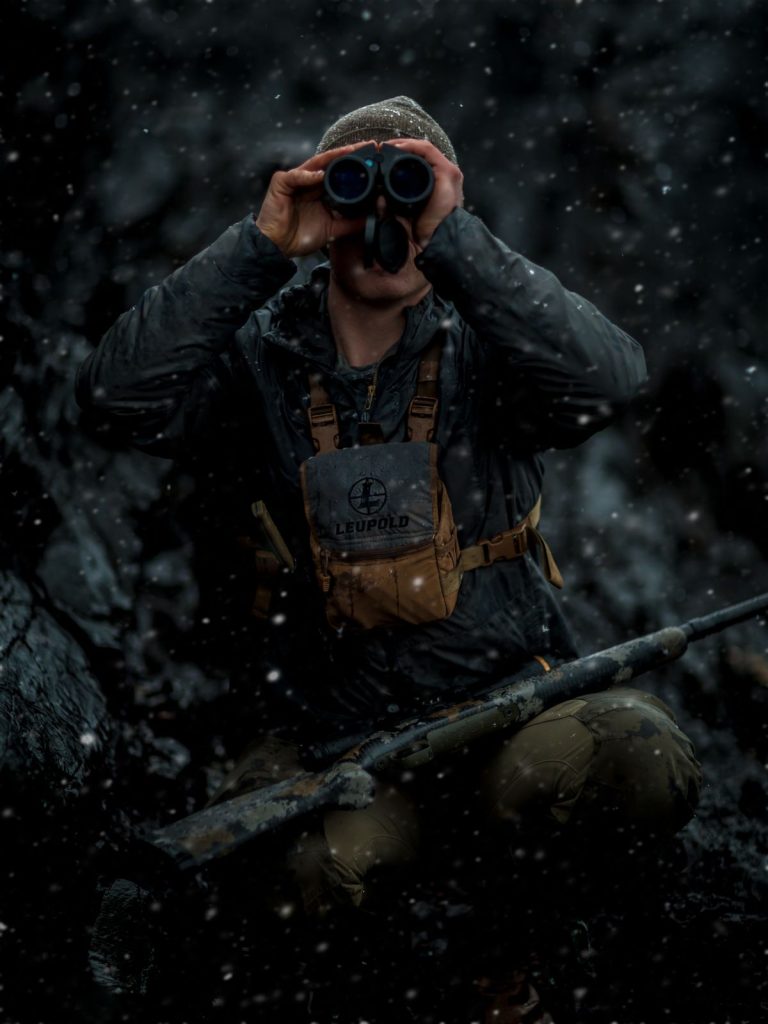
Hunter in falling snow glassing through binoculars, wearing a chest harness with a rifle across the knees
Photo: Jordan Bergendahl / Pexels
Research-based picks, specs cross-checked Plain-English optics explainers As an Amazon Associate we earn from qualifying purchases.
Interactive tool

Binocular Finder

Answer eight quick questions about where, what and how you hunt. You get a recommended configuration, the reasoning behind it, the trade-offs to expect and guides to read next. The rules are simple and explained in the result.

Question 1 of 8
Where will you do most of your glassing?
Editor’s shortlist

Six binoculars worth a closer look

A research-based shortlist, not a ranking. Each model comes from one of our buying guides, with specifications checked against manufacturer or retailer listings.

All buying guides
All-around 10x42
Nikon

Nikon Monarch M7 10x42

Open country, mixed terrain and glasses wearers who want a wide, easy-to-search 10x view.

Exit pupil
4.2 mm
Field of view
6.9° (362 ft at 1,000 yd)
Eye relief
16.5 mm
Weight
24 oz
  • Strength: Wide 6.9° field and long eye relief make scanning and glasses use comfortable.
  • Limitation: At 24 oz it is not a light carry, and it sits in the mid-premium price band.
Value 8x42
Vortex

Vortex Diamondback HD 8x42

Whitetail woods, treestands and dawn-to-dusk hunting where a wide, bright 8x view matters most.

Exit pupil
5.25 mm
Field of view
7.5° (393 ft at 1,000 yd)
Eye relief
17 mm
Weight
21.8 oz
  • Strength: A 5.25 mm exit pupil and a wide field suit low light and tight cover, backed by an unconditional warranty.
  • Limitation: 8x gives less reach than 10x when you are picking apart distant hillsides.
Entry-level ED glass
Celestron

Celestron Nature DX ED 8x42

First serious binocular for woods and field edges, with ED glass at an entry-level price band.

Exit pupil
5.25 mm
Field of view
7.5° (393 ft at 1,000 yd)
Eye relief
17.8 mm
Weight
24.9 oz
  • Strength: ED glass and phase/dielectric prism coatings in an 8x42 that is waterproof and nitrogen-purged.
  • Limitation: About 25 oz, so it is heavier than most 8x42 competitors.
Mid-range value 10x42
Maven

Maven C1 10x42

Western big-game glassing when you want ED glass and a 10x field without paying alpha-class prices.

Exit pupil
4.2 mm
Field of view
6.0° (314 ft at 1,000 yd)
Eye relief
16 mm
Weight
24.5 oz
  • Strength: ED glass and a 10x42 field of about 6° from a factory-direct brand.
  • Limitation: Sold mostly direct, so there are fewer places to try one before you buy.
Compact carry
Vortex

Vortex Diamondback HD 10x28

Backcountry and treestand hunters who count ounces and glass mostly in good light.

Exit pupil
2.8 mm
Field of view
5.1° (273 ft at 1,000 yd)
Eye relief
16 mm
Weight
13.3 oz
  • Strength: At 13.3 oz it is light enough to forget in a chest harness.
  • Limitation: A 2.8 mm exit pupil fades early at dusk compared with 42 mm models.
Rangefinder binocular
Vortex

Vortex Fury HD 5000 10x42

Open-country hunters who want glass and a laser rangefinder in one unit.

Exit pupil
4.2 mm
Eye relief
16 mm
Weight
≈ 32 oz
Ranging
to 5,000 yd (reflective)
  • Strength: Replaces a separate rangefinder, with angle-compensated distance shown in the view.
  • Limitation: Heavy at about 32 oz and priced well above a plain 10x42.

Specifications come from manufacturer and retailer listings and can differ between sources or model years — confirm on the product page before you buy. Prices and availability change, so we do not list them.

As an Amazon Associate we earn from qualifying purchases.
The magazine

Latest from the field guide

All explainers
Shop by hunting style

Start with the hunt you actually do

Terrain, light and distance change what “good optics” means. Each hub collects the guides, comparisons and models that fit.

All hunting types
Compare

Popular comparisons

All comparisons
Learn the basics

Optics specs in plain English

All explainers
Interactive tools

Work it out before you buy

All tools
Field guides

Care, carry and weather

Evergreen how-tos for keeping optics clear, protected and ready.

Our approach

How this site chooses and checks

Research, not lab tests

Picks start from manufacturer specifications and documentation, then are cross-checked against published reviews and owner feedback. We do not run laboratory tests and we do not claim hands-on field testing.

Specs are checked, and flagged

Magnification, objective size and exit pupil are exact arithmetic. Field of view, eye relief and weight come from listings and can differ between sources, so confirm them on the product page.

How affiliate links work

Product links go to Amazon with our Associates tag, and we earn from qualifying purchases at no extra cost to you. Our policy is that commission never changes how we describe a product’s trade-offs. Spotted an error? Tell us and we correct it in place.

FAQ

Hunting Optics — Frequently Asked Questions

Do you test the binoculars yourselves?

No. Our recommendations are research-based: manufacturer specifications and documentation, published reviews and optical fundamentals. We do not run laboratory tests or claim hands-on field testing.

Is 8x42 or 10x42 better for hunting?

8x42 wins for low-light woodland, treestand, and dawn/dusk hunting because of a larger exit pupil and wider field of view. 10x42 wins for Western open country, mountain glassing, and any hunt where you want more reach.

Do I need a tripod for hunting binoculars?

For 8x and 10x glass, a tripod is optional but extremely helpful for long glassing sessions. For 12x and above, a tripod is essentially mandatory if you want to pick apart hillsides without shake.

What objective lens size is best for low-light hunting?

42mm or 50mm. With 8x magnification, 42mm gives you a 5.25mm exit pupil and 50mm gives 6.25mm, both excellent for dawn and dusk. ED-class glass and dielectric coatings boost light transmission further.

Are rangefinder binoculars worth it?

For Western long-range hunters and precision rifle setups, yes — they save weight and time in the harness. For close-range whitetail hunters, a basic monocular rangefinder is usually a smarter spend.

How do I keep hunting binoculars from fogging?

Choose nitrogen- or argon-purged sealed binoculars, use anti-fog wipes on exterior lenses, keep lens covers on between glassing sessions, and avoid bringing cold optics into a warm cabin too fast.

What harness should I use?

A chest harness is the standard for keeping binos quick, protected, and silent. A bino harness pack adds weather sealing and storage for rangefinder, calls, and wind checker — preferred by backcountry hunters.

How does Best Binocular For Hunting earn money?

We participate in the Amazon Services LLC Associates Program. When you buy through our links we earn a small commission at no extra cost to you. Our policy is that commission never changes how we describe a product’s trade-offs.

Do you give legal hunting advice?

No. We focus on optics, scouting, and field comfort. Always follow your local hunting regulations and safety rules.